FR
FR


On the National Day for Truth and Reconciliation, Children’s Aid Foundation of Canada (CAFC) honours the strength and resilience of Indigenous children, families, and communities while acknowledging the lasting harms of colonialism. The tragic legacy of the residential school system and the Sixties Scoop – which forcibly separated generations of Indigenous children from their families, languages, and cultures – is not confined to the past.
Those injustices are reflected in the overrepresentation of Indigenous children and youth in Canada’s child welfare system. Today, Indigenous children make up roughly 8% of Canada’s child population, yet account for just over 50% of children and youth living in care. More than 28,000 Indigenous youth are estimated to be in care in Canada, with immediate and long-term impacts on:
While CAFC’s Indigenous partners are leading the way toward better outcomes, addressing the inequities created by colonial systems requires all Canadians – especially institutions and systems that have contributed to these lasting harms – to listen, learn, and take meaningful action.
Moving from immediate needs to long-term outcomes
As a foundation that operates independently of the child welfare system but engages deeply across it, we have a particular responsibility to recognize the role these systems have played – and continue to play – in the lives of Indigenous children, youth, and families connected to care.
Responding to immediate needs is critical. But reconciliation also requires sustained investment in the relationships, resources, and community-led approaches that help Indigenous children and families experience stability and well-being over time.
Our work spans that continuum, meeting urgent needs while addressing structural and systemic barriers across education, employment, mental health and well-being, and strong families and lifelong connections. We believe these areas, when considered holistically, can change the trajectories of children, youth, and families connected to care.
This commitment is reflected in Generation Impact, our 2025-2030 Strategic Plan, which identifies partnering toward Indigenous Impact and Reconciliation as a key priority.
Our work is also guided by the Truth and Reconciliation Commission of Canada: Calls to Action 2015 and the United Nations Declaration on the Rights of Indigenous Peoples. These critical documents urge governments and organizations to reduce the number of Indigenous children in care, recognize the role of families and communities in finding solutions, and honour the self-determination of Indigenous Peoples.
Learning from Indigenous-led solutions
For CAFC, reconciliation requires listening and being willing to change how we work. That means supporting Indigenous leadership and innovation, working with partners to understand where our resources can be most useful, and adapting existing programs when partners tell us a different approach will better serve their communities.
We’re still learning. The partnerships and programs below show different ways Indigenous partners are shaping support for children, youth, and families.
University College of the North
Recognizing the importance of culturally relevant practices, education, and wraparound supports, CAFC and The Northpine Foundation are partnering with University College of the North to support more Indigenous youth through the education system in Northern Manitoba.
Working alongside two high schools in The Pas, this initiative aims to increase graduation rates and post-secondary enrollment for Indigenous learners who have been involved in Child and Family Services (CFS), or whose caregivers were involved in CFS, the residential school system, or the Sixties Scoop. The approach brings Elders, family, culture, and ceremony into the school experience, alongside Graduation Specialists and life coaching.
In June 2026, 36 young people enrolled in the program’s first cohort graduated from high school. Participating students are showing increased confidence, greater optimism about their futures, and strong engagement in planning for life after high school.
Safe at Home
Safe at Home brings together partners in Ontario and Manitoba to deliver Caring Dads and Mothers in Mind, programs designed to prevent intimate partner violence and improve parent-child relationships. Indigenous partners are adapting the programs to reflect the needs and cultural practices of the families they serve.
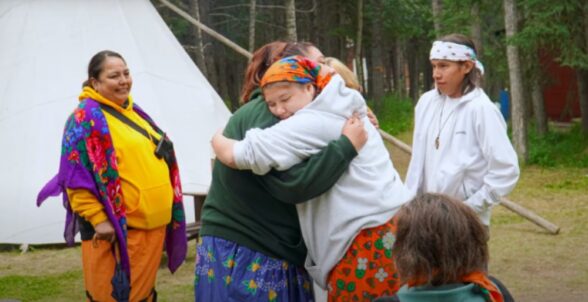
For example, Native Child and Family Services of Toronto’s Ninoshe (aunties) program provides caregivers with in-home parenting support. In Manitoba, Sagkeeng Child and Family Services began offering men’s wellness retreats and family incentives to help men deepen engagement with their community.
In a recent CAFC Indigenous Dialogue Series, Sagkeeng Child and Family Services shared that men who completed programming are now encouraging others in their community to participate. At Native Child and Family Services of Toronto, staff have shifted from thinking about how to recruit families to the program to how they can walk alongside them until they feel ready to participate.
Learning from both programs has taught us that adapting a program involves more than changing its activities – relationships and trust matter, too.
Back to the Land
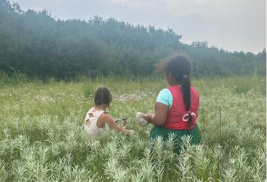
Since 2017, CAFC has partnered with 22 Indigenous-led organizations through Back to the Land, which supports children, youth, and families in reconnecting with culture, tradition, and community.
These opportunities take different forms, depending on the communities and organizations leading them. They include land-based parent and kin/child attachment groups, culture camps, ceremonies, medicine harvesting, and traditional arts. These activities strengthen identity and pride while reconnecting youth and families with the land and traditions of their communities.
Building trust through sustained and collaborative action
These partnerships do not represent a single model for reconciliation. They show why we need to listen to Indigenous partners, honour approaches shaped by Indigenous knowledge and priorities, and support that work over time.
We recognize that CAFC has much more to do. Trust is built through consistency, following through on commitments, and being accountable for how we work.
Beyond September 30, we will continue to learn from our Indigenous partners and allow those relationships and lessons to guide how we invest our resources, measure progress, and work toward lasting change.