FR
FR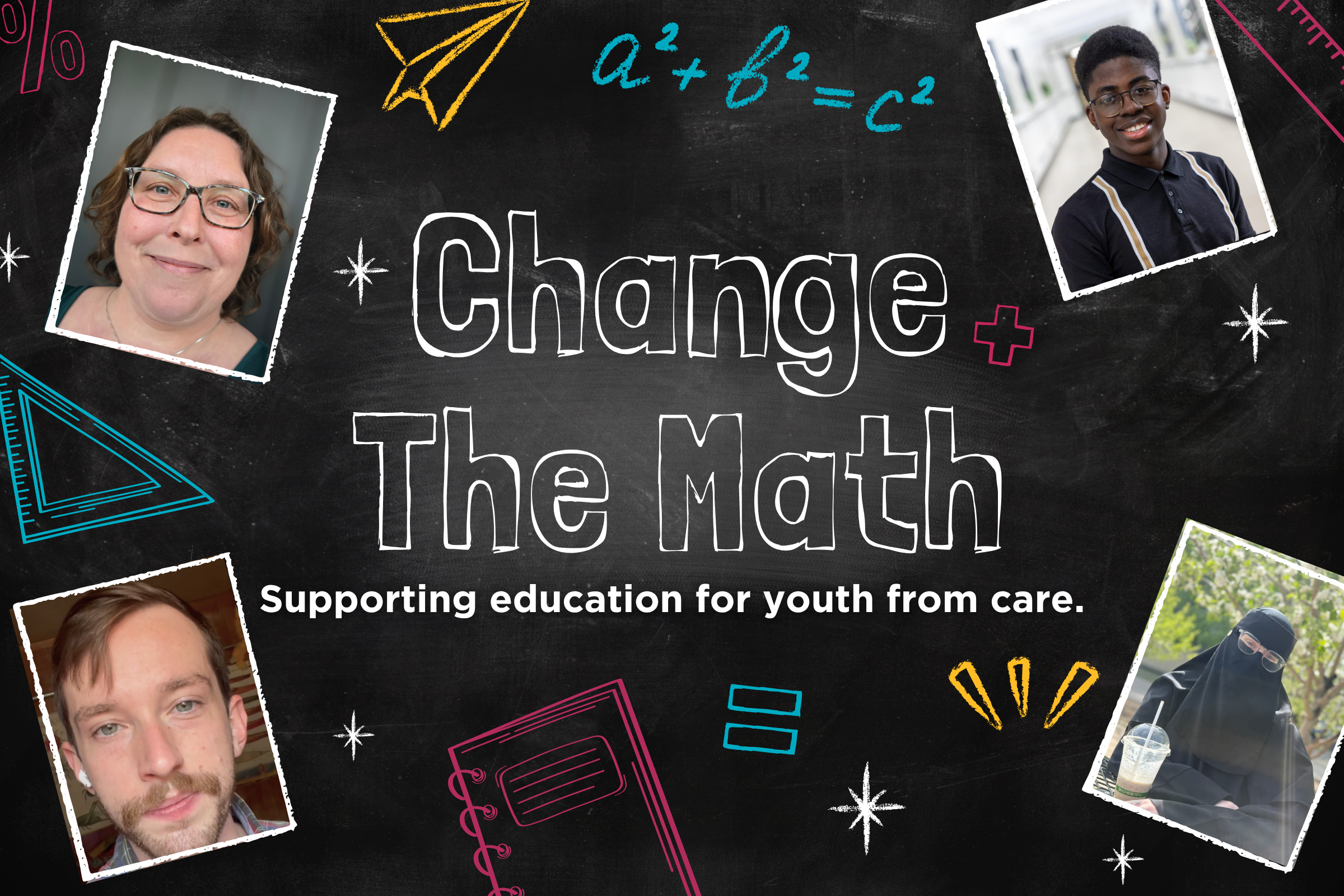


Right now, millions of students across Canada are preparing for a new school year. They buy textbooks, set up dorm rooms, and map out their futures. But for young people who grew up in the child welfare system, starting another academic year comes with real world barriers that standard school supply lists can’t fix.
At Children’s Aid Foundation of Canada (CAFC), we know that talent, ambition, and drive are everywhere… but equitable opportunity is not.
This back-to-school season, we’re challenging the statistics facing youth in and from care. By changing the support surrounding young people, we change their outcomes. We change the math.
The Formula Standing in Their Way
To understand why donor support is so critical, we have to look at the very real obstacles stacked against students from care.
- High School Graduation: In Ontario, fewer than 50% of youth raised in child welfare graduate high school, compared to 83% of the general population.
- The Living Expenses: In Canada, the average cost of post-secondary education is $35,000 per year, and 77% of that cost goes toward basic living necessities like rent, food, and transit, not just tuition fees.
- Homelessness Risk: Youth transitioning out of care without a financial or familial safety net face a 200 times higher risk of experiencing homelessness over their lifetime.
When young people “age out” of care, systemic safety nets often vanish overnight. For bright, determined students, the stress of basic survival can quickly derail a promising academic journey.
Hear Directly From the Students Rewriting the Statistics
Youth from care are not defined by their past experiences. They are defined by where they are going. Watch below to hear directly from current post-secondary students on what equitable support means for their education and independence.
Removing the Graduation Barrier
Watch Alexander share what it takes to navigate the transition from care into university, and why closing the high school graduation gap requires intentional support.
Navigating the Reality of Aging Out
Hear from Marie, an Applied Bachelor of Arts student, on the sudden financial reality of independent living after aging out of care.
Proof of Impact: The Class of 2024-2025
When we invest in long-term structural supports, like dedicated tutoring, housing relief, mental health resources, and scholarships, young people thrive on their own terms.
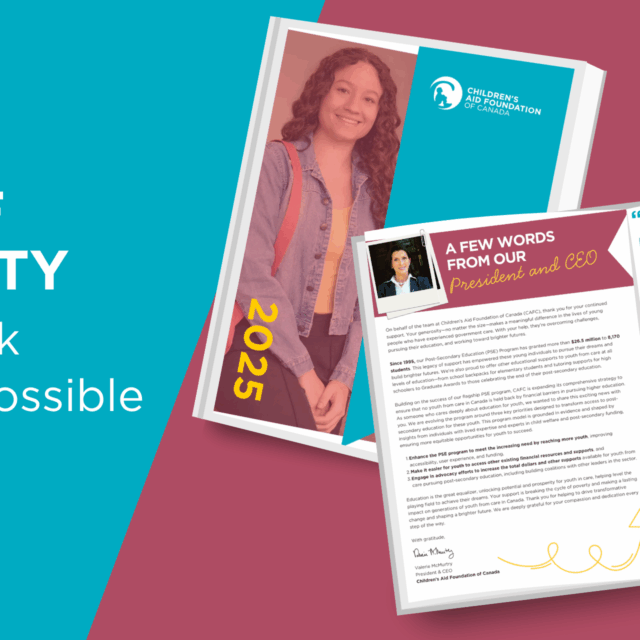
Look no further than our 2024-2025 Post-Secondary Education Yearbook, which highlights real degrees, higher graduation rates, and incredible personal achievements. Last year alone, CAFC distributed over $2 million in educational funding to 588 students across Canada.
Among them were 111 graduates, including:
- 45 University Graduates
- 58 College Graduates
- 8 Trade School and Career College Graduates
- 8 Master’s and PhD Graduates
Watch Hanna talk about pursuing higher education and how community support provides the foundation needed to achieve big goals.
How Your Donation Changes the Math
When you donate, you aren’t funding temporary fixes. You are providing direct, flexible resources through initiatives like our Post-Secondary Education Program.
- Your Support + Dedicated Tutoring = Higher High School Graduation Rates
- Your Gift + Flexible Scholarships = Leveling the Academic Playing Field
- Housing Relief + Mental Health Resources = Students Who Can Focus on Studying, Not Surviving
Help Us Change the Math
The school year has officially started, but the funding gap for hundreds of students across Canada remains. You can help bridge that gap today.
When we change the math holding youth back, bright students take care of the rest. Invest in their ambition and help ensure every student from care has a fair shot at success.