FR
FR


Far too many women, children, and families face the devastating impacts of intimate partner violence. In August 2023, the federal government declared intimate partner violence an “epidemic.” That same year, rates for police-reported family violence and intimate partner violence increased by three percent and one percent, respectively.
Evidence shows that exposure to intimate partner violence has profound and long-lasting impacts on a child’s emotional well-being, development, and future stability – especially if the child is under the age of four. Intimate partner violence is a leading cause of child welfare investigations in Canada that may lead to children being placed in government care.
That’s why, together with Indigenous and non-Indigenous experts in child welfare, child development and family violence, Children’s Aid Foundation of Canada continues to deliver Safe at Home – a multi-year initiative (2022-2027) operating across 12 partner agency sites in Ontario and Manitoba and including three Indigenous-led partners.
A Collaborative Approach to Strengthening Families
Now in its fourth year, Safe at Home aims to strengthen families experiencing intimate partner violence and prevent violence from reoccurring by repairing and strengthening parent-child relationships and helping mothers and fathers improve their parenting skills so children grow up in healthy, caring homes. This initiative addresses a critical gap in services for families experiencing intimate partner violence by placing a focus on the needs of children, particularly those under the age of four, who have been exposed to this violence.
Additionally, Safe at Home is changing the way frontline service providers in the child welfare system deliver crucial services and engage with families impacted by intimate partner violence. It provides them with the knowledge, skills, and abilities to deliver research-backed programming and enhance partnerships with community-based service providers.
Since its inception, the initiative has provided life-changing support to over 300 mothers and fathers and positively impacted the lives of more than 500 children, including 283 young children under the age of four.
Recognizing the unique needs of families involved with the child welfare system and impacted by intimate partner violence, the Safe at Home project has invested in two proven programs – Caring Dads and Mothers in Mind.
Caring Dads

When I joined, I blamed everyone else for my problems. The facilitators challenged me to take responsibility. It was hard, but now I understand that change starts with me. My son told me he’s proud of me for trying to be better – that moment keeps me going. – Caring Dads participant
Caring Dads is a 17-week program for fathers who have committed or are at risk of committing intimate partner violence. The program helps them understand the root causes and consequences of their behaviour and improve their relationship with their children. While the program works directly with men, it strives to improve the safety and well-being of mothers and children.
Internationally recognized, Caring Dads, addresses the fathers who have used violence or abuse but remain connected to their children. And to increase the likelihood of success, it ensures participating fathers are surrounded by a community of peers, family, and friends to support them.
Highlights (2022 – 2025)
- Seven agencies have completed or are currently running a Caring Dads group.
- 172 fathers have completed the program, and 126 mothers were engaged.
- 416 children have been reached by the program, of those 170 were below the age of four.
Before this program, I never thought about how my words and actions affected my kids. I thought providing food and shelter was enough. Through Caring Dads, I learned that being a good father also means listening, apologizing, and creating a safe space for my children. Last week, my daughter hugged me and said she feels happy when I’m around. That was the first time I heard that in years.
– Caring Dads participant
Mothers in Mind
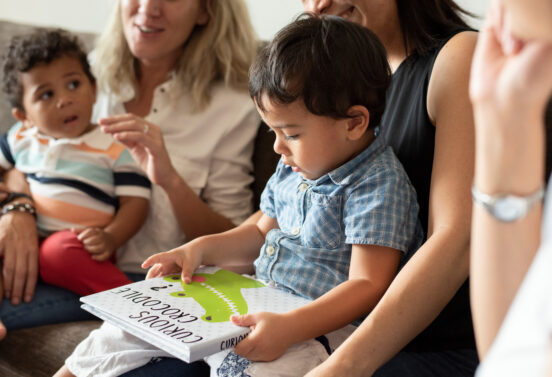
MIM has made an absolute world of a difference, and I don’t think I would have healed or grown as quickly or as well as I have, if I didn’t have this group. Please don’t ever stop this group – you guys are saving moms and kids every day.
– Mothers in Mind participant
Mothers in Mind is a unique 12-week, mother-child therapeutic program that recognizes how the experience of violence may impact a mother’s ability to respond to her child’s needs. The program intervenes early in the lives of these mothers and their children. It helps mothers understand how trauma influences their parenting so that they can become more attached, responsive and effective with their children – and break the intergenerational transmission of trauma.
Highlights (2022 – 2025)
- 27 groups completed, and four groups currently taking place.
- 137 mothers reached.
- 113 children under the age of four have participated.
I really enjoyed my experience with MIM. It was so good to connect with other moms in similar situations. The topics talked about were all so important and it was nice to hear others thoughts and experiences. It’s comforting and it’s a reminder nobody is alone in what you’re going through.
– Mothers in Mind participant
Supporting Indigenous families
Understanding that Indigenous children and families require tailored, culturally sensitive approaches that address their unique needs, Indigenous-led child organizations are adapting Caring Dads and Mothers in Mind to meet community needs or are offering their own solutions.
Indigenous partners have incorporated practices such as smudging, drumming, language revitalization, and Indigenous worldviews to foster identity, belonging, and intergenerational connection.
According to Native Child and Family Services of Toronto, a valued delivery partner within the initiative, adaptations are crucial for ensuring that programs are delivered with an approach recognizing the intergenerational trauma faced by many Indigenous families due to factors such as racism, colonialism, historical and ongoing trauma, poverty, and overrepresentation in child welfare. Participation in Indigenous-led programs is growing, reflecting increased trust and the development of supportive community networks.
Amanda MacEwen, Manager of Dtebashkine Bawaajige-Dream Keepers at Native Child and Family Services of Toronto, says adaptations are crucial for ensuring program delivery approaches recognize the intergenerational trauma faced by many Indigenous families due to several factors: racism, historical and ongoing trauma, poverty, overrepresentation in child welfare. She’s optimistic about the potential of Safe at Home to build trust between Indigenous communities and the child welfare system and believes using a trauma-informed approach will help Indigenous families receive the support they need to thrive.
As Safe at Home, which began as a child welfare-led project, continues to evolve, it is building bridges between agencies and community-based partners, finding unique ways to collaborate that are culturally grounded and community-anchored, better serving mothers and fathers and their children.